Say it together
This country’s motto is not a word. It is an instruction.
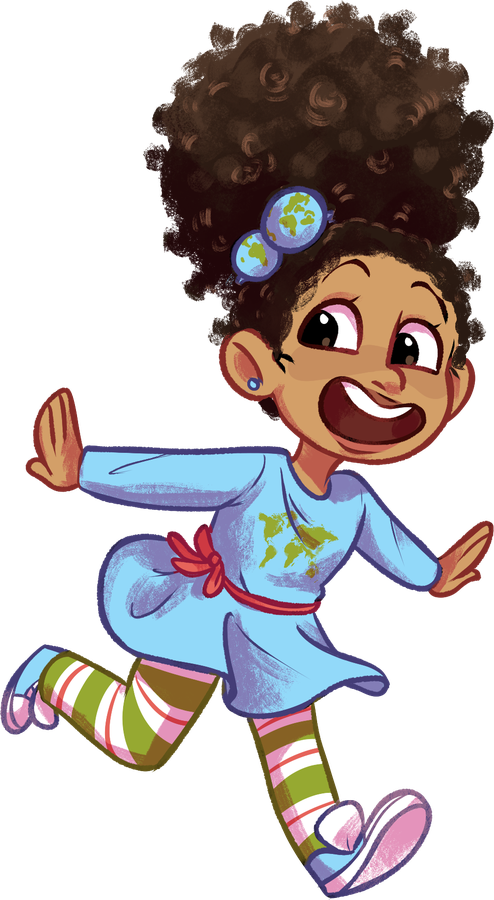
Swahili is spoken across East Africa by well over a hundred million people. In Kenya it is called Kiswahili, and it is the language the country's motto is written in. Wanjiru would greet you with Harambee, which means all pull together.
Every word here has a voice. Tap the ear on a card to hear it before you try it yourself.
These words are written and explained here, and a reader from this city is recording them. Until that recording exists there is no audio, because a machine guessing at a language it does not know is worse than silence.
Your turn
One is not enough. Everybody is.
Wangari Maathai paid rural women a small amount for every tree they planted that lived. Not planted. Lived. Her movement has put somewhere around fifty million trees in the ground since 1977. Plant one and see what one is worth.
Tap the hillside to plant your tree.
Wangari Maathai was awarded the Nobel Peace Prize in 2004, the first African woman to receive it.
We’ll do this
Six ways to pull together.
Harambee is not a feeling, it is a number of people each doing a small thing. These are six small things. Pick at least one your class will actually carry out.
You have been somewhere real. Now it is about you.
Harambee is not something one person does well. It is the word Kenya put on its coat of arms for the thing that only happens when enough people each carry a little. Wangari Maathai never planted fifty million trees. She asked.
Ask two people to do one thing with you today. Something small and real that is genuinely better with three than with one: shifting something heavy, tidying a corner nobody owns, starting a game that needs more players. One of the two has to be somebody you would not usually ask. Then come back and take your stamp.
For grown-ups
Running Nairobi with children
What the child should be able to do at the end
The child can name one thing that only gets built when many people each do a small part, and can do their part.
What to read together, and the questions that go with it
Wangari Maathai's Nobel Peace Prize lecture, 2004, is short and readable aloud in parts. The Green Belt Movement's own site carries her account of how it began. Grade 3 and above; read it to younger children.
- Why did Wangari Maathai pay women for trees that lived rather than trees that were planted?
- She was the only person objecting to the tower in Uhuru Park at first. What made that hard?
- What is something in your neighbourhood that would only work if many people helped?
- What is your small part, and who would you ask to do theirs?
A note on Wangari Maathai
She was beaten and jailed for this work. That is in the record and it is not hidden here, but it sits in one hotspot in plain language rather than as a set piece. Read the room and decide for your own group whether to open it or pass over it.
If a device is not available
The whole lesson works as a conversation. Ask what needs many hands. Ask who would have to help. The six projects need no screen at all, and planting one real thing and keeping it alive for a year is the entire lesson.
Other sources
The tree figure quoted in the lesson comes from the Green Belt Movement’s own reporting.
Map and image sources
The lesson map is drawn with OpenFreeMap and OpenMapTiles, using OpenStreetMap data under the Open Database License. The map component is MapLibre.